
Keyword density is one of the oldest ideas in SEO. It simply measures how often a word or phrase appears compared with the total number of words on a page. Many people still ask for the perfect percentage. The honest answer is that there is none, but the measurement is still useful in the right way.
How to calculate it
Divide the number of times your keyword appears by the total word count, then multiply by 100. If "short link" appears 6 times in a 400-word article, the density is 6 ÷ 400 × 100 = 1.5%.
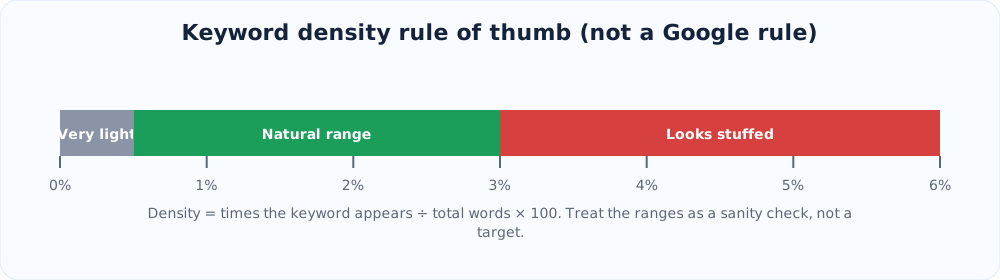
Does Google use a target percentage?
Search engines do not publish an ideal keyword density, and modern ranking systems look at meaning, context and usefulness rather than counting repeats. Pages rank because they answer the searcher's question well, are trustworthy, load quickly and are linked to by others. Repeating a phrase more often does not make a page better.
Why density is still worth checking
- It catches accidental stuffing. If one phrase makes up several percent of your text, it probably reads awkwardly.
- It shows what your page is really about. The most frequent words and two or three word phrases tell you whether your copy matches the topic you want.
- It reveals gaps. If your target phrase never appears, searchers and search engines may not see the connection.
Check your text in seconds
Paste your copy into the free keyword density checker. It shows your word count, reading time and the top single words and phrases, and it measures one target keyword. Everything runs in your browser, so your draft stays private.
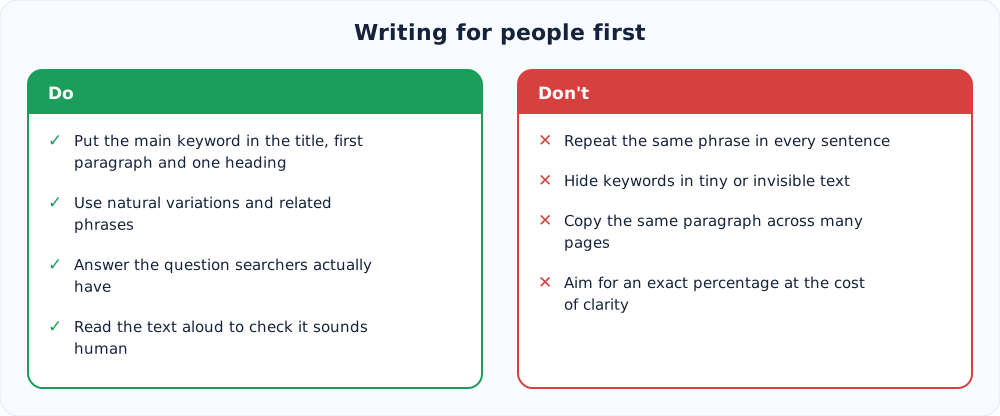
Where keywords should appear
- The page title and the main heading.
- The first paragraph, so readers see immediately that they are in the right place.
- One or two subheadings, where it is natural.
- The page address, using a clean slug from the slug generator.
- The meta description and image alt text. Create the tags with the meta tags generator.
Think topics, not single words
A good page covers related questions and terms naturally. If you write about short links, you will also mention tracking, QR codes, custom names and safety, without forcing them. Planning the subtopics first usually gives better results than counting words afterwards.
Summary
Use keyword density as a quick health check, not a goal. Write for the reader, make sure your main phrase appears where it fits, and spend the rest of your effort on useful content, fast pages and good links.
Ready to try it?
Make a short link in seconds. It is free and no sign-up is needed.
Create a short link